Thursday, 14 April 2016

Representation of Regional Identity


TASK - read the information below and then watch the Doc Martin clip. Make notes on how sound, camera work, mise en scene and editing construct a representation of regional identity. 

Regional Identity refers to the part of the United Kingdom someone is from.  It could refer to a general area such a “north” or “south”, a country such as “English” or “Scottish” or specific towns such as “London” or “Manchester.” (from TES revision guide)

There are several regional stereotypes widely seen on television:
  • Scottish – often shown as being money obsessed, won’t pay for anything, drinks a lot of alcohol, loves the outdoors, wears kilts, eats haggis, quite aggressive and violent
  • Welsh –Often shown as living in the middle of the countryside
  • Irish – often shown as living in the countryside, working in rural areas such as farms, being very religious, being good at dancing and singing, very friendly but less intelligent
  • English – often shown as being racist, obsessed with beer and football living in London. Sometimes the stereotype goes in the opposite direction of showing English people as very rich, posh, happy, living in castles and being very “royal.”
  • London – There are 2 main stereotypes of Londoners.  One is that they are often shown as being rich, posh, snobby, upper class, Hugh Grant types from central or west london.  The other is that they often shown as being from north, east or south London, poor, common, lower class, criminalistic, violent “Kidulthood” style
  • Manchester / Newcastle / Liverpool – Often shown as being “chavs”, wearing fake designer labels, or tracksuits, drinking a lot, being aggressive, uneducated, criminals (e.g. Shameless)
  • Essex – often shown as being glamourous but cheap, footballer’s wives, lots of partying, being quite stupid
  • Yorkshire – Often shown as living in rural countryside, with rolling hills and cobbled streets, being quite old fashioned (think Coronation Street)
  • Cornwall / Somerset – Often shown as being “backwards”, living in rural areas, working on farms
  • South England – often shown as being the centre of culture, modern, classy, clever, sunny, richer, doing middle class jobs such as managers etc
  • North England – often shown as being poorer, bad weather, lower class, aggressive, less culture, less clever, doing working class jobs such as builders etc...


Tuesday, 12 April 2016

Representation of Sexuality


How is a representation of sexuality constructed in this clip? Comment specifically on the SOUND & MISE EN SCENE

Remember! First think about what you are being shown - are you seeing a fairly stereotypical representation or is it subversive? Also remember that more than one stereotype exists for groups in society (e.g. in this clip we see a range of fairly stereotypical constructions of homosexual males and females).

The key to your response is using explicit examples to back up/support your findings. Use the POINT, EVIDENCE, EXPLAIN as a basis for your paragraphs BUT try and incorporate more than one piece of supporting evidence to solidify your point.

Create a grid like this to make notes as you watch:
SOUND
MISE EN SCENE


Monday, 21 March 2016

Representation of Disability


Watch the above clip. In what ways is DISABILITY represented? Does this representation conform to typical societal stereotypes?

Easter Holiday Homework - Write two paragraphs answering the question above. You need to refer to how camera, sound, editing and mise-en-scene help to construct this representation.

Here is an example paragraph:
In this clip from 'Call the Midwife', we are shown a typical representation of disabled people as helpless and isolated from society. The clip starts with a long shot of Jacob walking down the corridor. This shot allows the audience to get a sense of his disability (as it lingers) but it also emphasizes the fact that he is alone - he looks small in the surroundings. This sense of isolation is further reinforced with the use of parallel editing - the scene cuts from Jacob in the corridor (listening at the door) to the interior of the room he is outside. This use of editing creates a sense of separation - Jacob is on the outside and not a part of the conversation. The mise-en-scene also helps to suggest that he is being kept in the dark (figuratively) as the lighting is used to cast a shadow on his face. Another moment where Jacob's isolation and helplessness is highlighted is when the woman says 'Sally isn't like any other pregnant woman!'. The shot of the woman cuts to a close up of Jacob's face - this close up allows the audience to see the hurt and frustration on Jacob's face. Furthermore, non-diegetic music of a sombre nature plays over the shot - this really helps to highlight Jacob's helplessness. 

Wednesday, 9 March 2016

Exemplar Evaluation

Here is a link to a blog which has a level 4 evaluation. Take a look for some inspiration:

CLICK HERE!!

Thursday, 4 February 2016

Tuesday, 5 January 2016

Improving Practical Work

Now that you have a first rough cut of your film opening, let's look at ways in which we can improve your practical work in an effort to maximize your grade.

Your video is marked on the following:

  • Producing material appropriate for target audience and task (e.g. this should resemble a horror film opening with a specific audience in mind)
  • Using titles/credits appropriately and in line with professional conventions
  • Using sound with images and editing appropriately for the task set
  • Controlled use of camera and attention to framing
  • Attention to mise en scene
  • Variety of shot types (using apt shot sizes)
  • Using editing so that meaning is appropriate to the viewer
Each area can be classed as demonstrating a MINIMAL ability (level 1), a BASIC ability (level 2), a PROFICIENT ability (level 3) or an EXCELLENT ability (level 4).

Take a close look at your own work. Using the discussion and peer assessment task undertaken in class, create a blog post which assesses your own skills in the bullet points listed above. In the latter half of your blog post, you must outline an action plan for what is required to improve your work. This is due on your blog by the end of tomorrow's lesson (Wednesday, 6th January).

The deadline for a second video cut is Thursday, 21st January.

Tuesday, 1 December 2015

Outline of Deadlines

Research and Planning - all tasks must be completed and uploaded to your blogs by Tuesday, 15th December.

First cut of film opening - due on blogs (all group members) by Thursday, 17th December

Wednesday, 25 November 2015

Blogs Must, Should, Could List

Developing your planning and research - How to achieve a level 4!

Below are some examples of level 1 - 4 coursework. I have used location shots as an example of the level of detail and analysis required to achieve each of the levels. Your work will need to be of the same standard throughout to ensure you can achieve the level required.

LEVEL 1 - Minimal evidence of research and planning

This constitutes a level 1 because only images of the locations and very brief descriptions have been included. There appears to be no thought process behind the locations chosen. The presentation shows no creativity whatsoever.  

LEVEL 2 - Basic evidence of research and planning

This has achieved a level 2 because there is evidence of basic organisation and some effort to explain possible effects the chosen locations would have on audience. The presentation shows a basic amount of effort.

LEVEL 3 - Proficient evidence of research and planning

This has achieved a level 3 because the post clearly outlines the group's location requirements in relation to their concept. Each location is analysed and linked directly into what the group wish to achieve and how the location will assist with that ambition. Mise en scene is considered, as is society's collective understanding of genre. The presentation is of a high standard.

 LEVEL 4 - Excellent evidence of research and planning

This has achieved a level 4 because it has all the elements of the level 3 blog example but it then goes on to analyse how their own location choices are influenced by other pieces of work in the same genre. There are specific examples included. The presentation is excellent.


Thursday, 12 November 2015

Planning Tasks - Continued: Due Tuesday 24th November

Over the next week and a half you should each be responsible for a pre-production element of your project. You can choose from:
  • Script
  • Storyboard
  • Location shots
  • Casting shots and wardrobe decisions
  • Shot list and shooting schedule (this should be completed last!)

Between you all of these elements will need to be completed on Tuesday, November 24th. This means you have 4 hours of lesson time.

Below are instructions for completing each of these elements correctly. Please ensure you read carefully.

SCRIPT:
Your opening will require a full script (even if you only have minimal dialogue). Your script should be completed in a Word document and uploaded to a site like Scribd so you can embed it into a post. This is a guide to scriptwriting.

There are three bodies of a script: Headings, narrative and dialogue. Each of these has three points to remember.
Headings: 1. Master scene headings which include:
a) Camera location - EXT. (exterior or outside) or INT. (interior or inside)
b) Scene location (LOCAL RACE TRACK)
c) Time (DAY or NIGHT)
2. Secondary scene heading
3. “Special headings” for things such as montages, dream sequences, flashbacks, flash forwards, etc...

Narrative Description: 
1. Action
2. Character and settings (visual)
3. Sounds

Dialogue:
1. The name of the person speaking appears at the top, in CAPS.
2. The actors direction (AKA parenthetical or wryly). Try to avoid these as much as possible. Both the director and actor will appreciate it.
3. The speech.
Putting all this together you should come up with something that looks like this:

INT. BARRY'S BAR - NIGHT
BOBBY is playing darts as he balances on on one foot aims his dart, sips a beer, and eats a handful of peanuts:

                        BOBBY
      (Drunkenly)
   I guess I need a bulls-eye.

As the PHONE RINGS:
           
           BOBBY
   Dammit! I told her not to call me!

BOBBY reaches for the phone and topples over.

STORYBOARDING:
Take your time when creating your storyboard! You will need to include an image of the shot, the type of shot (see short codes below), the type of cut to the next shot, the sound over the shot (e.g. diagetic or non-diagetic) and a brief description of the action. There is a website you can sign up to for a free trial called Storyboard That - it is a great site (especially if you aren't a great artist!).


SHOTS & ANGLES:
Extreme close up - ECU
Close up - CU
Mid-shot - MS
Long Shot - LS
Extreme long shot - ELS
High angle - HA
Low angle - LA

CUTS/TRANSITIONS
Straight cut
Fade to black (or white)
Dissolve 


LOCATION SHOTS:
Consider where you will be filming very carefully. You should have a photograph of each of your locations and a full explanation of what you intend to film there, why you have chosen the location (think mise-en-scene, audience expectations, connotations etc...)

Location: Detached house, MK Village (using exterior only)
Scenes to be filmed: 1, 2 and 10
This location will help to establish the genre of our piece (horror). The house is rundown and interesting shapes make up the exterior - it has a look of a 'haunted' house which should play into the audiences' fears (helping us to establish the desired tone for our opening). As the house is detached it suggests isolation which is fitting with our main character's predicament - she is alone as she is pursued by a killer.

CASTING SHOTS & WARDROBE CHOICES:
Again, these are important decisions which need to be considered carefully. You will require photos of your actors and possible costume choices appropriate to their characters. Remember to consider the representation of your characters. What are you trying to convey and how can this be done visually?

Name of actor: Sally Smith
Role: Polly Kent (First victim of killer)
Reason for casting: Sally looks fresh-faced and innocent. As her character is killed early on in the opening, it is important that a feeling of pity for this character is established as soon as possible. Casting this young and attractive actor will help the audience to immediately feel sorry for her. We will also be appealing to our target demographic with the casting of an actor of a similar age group.


Wardrobe - We want to really emphasize the innocence of this character so that the audience feel the full impact and horror of her murder. The dress pictured on the right has the right balance of innocence and beauty. The short sleeves and frilled front have an almost school girl quality which again would help with establishing the character's vulnerability. We chose white due to the strong connotations of innocence and purity. We felt the dress on the left was a little too provocative and would distract from the victim's innocence.

SHOT LISTS & SHOOTING SCHEDULE
A shot list is a full log of the shots you want to include in your film; essentially it is a checklist filled with finer details that will give your filming a clear sense of direction and purpose.

A shooting schedule is basically a plan of action. It should work in harmony with your shot list but should also serve as a reminder of where you are shooting, what times, what equipment you need (this includes props, costume, cameras etc...) and who is required.

Tuesday, 10 November 2015

Planning Tasks: Due November 17th

Once you have received audience feedback and decided which idea you are going to start developing, you are ready to undertake the planning tasks.


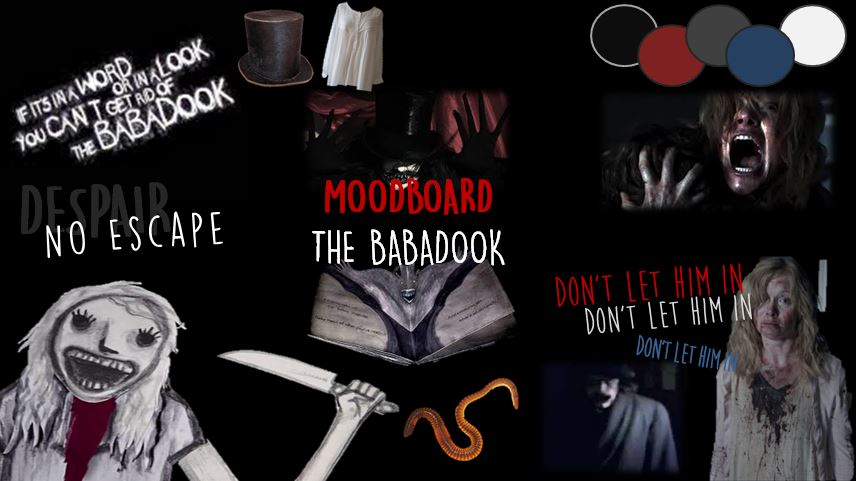
  • The first task you must complete is a moodboard for your film. The purpose of this moodboard is to get you thinking about the overall look and feel of your film. What do you want the finished product to look like? Ensure you consider existing products in the same genre. Consider: colour, imagery, font styles, key words, costume, character types etc...


Here is an example moodboard:


  • If you are aiming for a level 3/4 mark you should also conduct some further research into the CODES AND CONVENTIONS of your chosen sub-genre. Consider the following: what are the typical plots, what colour palettes tend to be used, what font styles are employed, what imagery is typical? To push even further: what about the editing styles and use of camera?
  • NARRATIVE STRUCTURE: Using Todorov's theory, outline the basic narrative of your film (as if you were making the whole thing). Here is an example:

  • TITLE & LOGLINE

Decide on a title and analyse your choice - you should show progression of your ideas (e.g. not just coming up with one title and settling on it - you should have a variety of options) and reasoning behind any decisions (consider conventions of your genre - see slide above).


Writing a logline: You will have to ensure you have communicated with all your group members so that you can all agree on this.


Wednesday, 4 November 2015

Pitching Your Ideas

Task: On your blogs, you must pitch between 2 and 3 ideas for your horror film. The pitch should outline a basic plot with some consideration of sub-genre.


Your pitch should be filmed in the following style:


Once you have added your pitches to your blog, allow members of the class to view them and vote on which they think you should make. You can add a poll function to your blog post (like I have done below). Click HERE for a link with instructions on how this is done.

Out of the film ideas pitched, which would you most like to see being made?

Tuesday, 3 November 2015

Target Audience - Research Task: Due 5th Nov

As outlined in the lesson, you will be undertaking some research into the target audience of horror films. You must produce a case study of an existing horror film. Use the following as guidance for the content. This piece of work should take approximately an hour to produce:


Tuesday, 20 October 2015

Close Analysis - Horror Openings (Due 3rd November)

TASK - Due TUESDAY, 3rd NOVEMBER
Your next research task is to investigate and analyse 5 horror film openings. One of the films you must include is Alfred Hitchcock's classic horror, 'Psycho'. The opening sequence to this film was created by legendary designer, Saul Bass.


Your research should include analysis of 5 horror opening and should address the following points:

Action (this can include dialogue, imagery/iconography etc...)
Print styles (font type, colours, how the credits appear etc...)
Music/sound

Your research should consider how these three elements contribute to the atmosphere created in the opening and how they indicate the genre of the film to the audience. 

Here is an example of how you might set out your work:

And here are some openings you may want to use: